


We truly live in strange times. At the end of the Summer of 2023 the Covid-19 pandemic restrictions are pretty much over unless you’re in a blue state where they’re trying to still hold on to control, predominantly in the bigger cities. In the rest of the world, our focus has moved on to other pessimistic subjects. Apart from the UFO/UAP phenomena, it seems that all our conversations revolve around sex, death and money. Cue Alice Cooper!
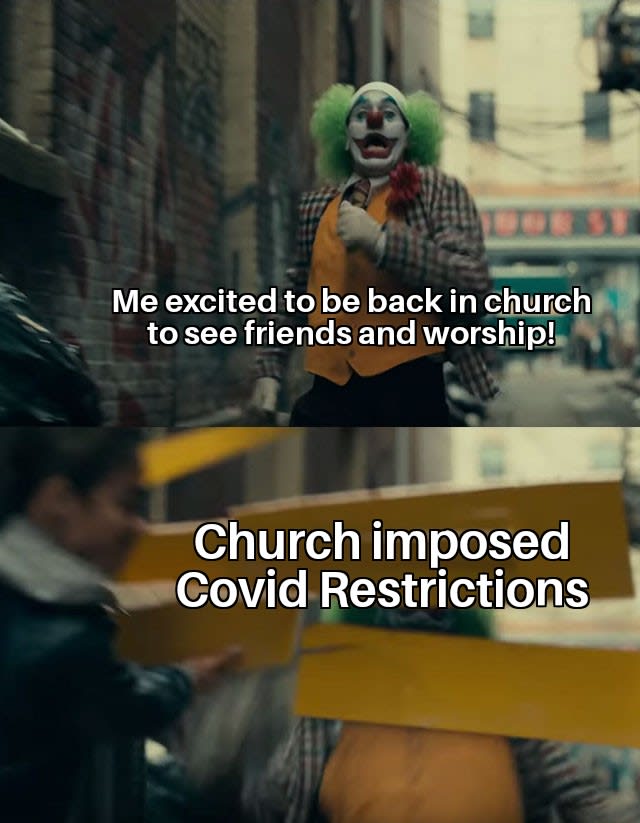
But as they say, hind sight is 20/20 and 2020 was a strange year as it appeared we were a part of some great social experiment of what we could be forced to do and what we were willing to surrender in the way of freedom for personal safety. “Those who would give up essential Liberty, to purchase a little temporary Safety, deserve neither Liberty nor Safety” is a quote and motto attributed to Benjamin Franklin. Even though COVID is now in our rear-view mirror, we are still wrestling with the consequences of it on our society. As we pick up the pieces of our post-COVID world, many are looking back to figure out where we went wrong.
We are not just looking where we went wrong in our government with its excessive over-reach but in our places of worship. For the first time in history, the church, which allegedly worships and serves the LORD Jesus Christ who has the power over life and death, who holds the keys to death, hell and the grave, bowed the knee to the government and to the fear of death. Sorry, Jesus, Uncle Sam’s got this one!
Not just the fear of death, but the fear of death of dying alone in a hospital away from your family and friends, that fear gripped the hearts of many people during the pandemic for nearly two years. Reports of many people’s loved ones dying without loved ones at their bed side spread quicker probably than the virus. Fear reigned along with its siblings of uncertainty and distrust as everything about Covid-19 was politicized in an already polarized nation.
Now we know that the Covid-19 numbers where hyped and much of what we did to protect ourselves (masks, vaccines, quarantines, etc.) were useless and ineffective. The casualties of Covid-19 were less than 1% and mainly the elderly, those with respiratory issues, and other morbidities that increased their rapid decline. There were other casualties like small businesses and churches that have either closed their doors and or are struggling to keep them open.
Covid-19 was for the church like the 2008 financial crisis (often referred to as the Great Recession of 2007-2009) was for business. Back then my career was in the hardware and automotive industries. When the 2008 financial collapse hit, we noticed that all the smaller distributors were slowly being consumed by the larger ones. Slowly over the course of a few years, all the smaller ones were acquired and or gone out of business. It is my opinion that the same thing is happening to the evangelical church in this post-COVID world.
Larger churches that have been able to keep their doors open and their services active during the pandemic have slowly been absorbing believers who were ready to return sooner than their original smaller congregations or decided it was time for a change. The reality is that the churches that didn’t bow to fear are the ones thriving and those that did are either struggling or on their way out of existence.
Who stopped going to church? There have been many articles written about this over the last few years about this subject, and many will be referred to in this one below. It would be redundant to repeat this information, but it does support many of the points of this article.
It is my belief that Covid-19 separated the wheat from the chaff, to use a biblical analogy. Cultural Christianity has plagued the American church for many decades. If you unaware of the term, it basically means someone who claims to believe in Jesus Christ as Lord and Savior, but they’ve truly never had a transformative experience of salvation, and whose lifestyle does not truly match what they profess. In this case, the disease was the cure in my opinion.
Why do I consider my belief to be true? Because the indwelling of the Holy Spirit calls a person to be a part of the church community. True believers are drawn to each other. There is an internal need for the many to become one. Like many other believers, we craved to be together again with our brothers and sisters. It’s hard to describe but my need to hug another person was so great but interpersonal contact became such a taboo. The loss of fellowship weighed heavy on our hearts and consciousness. A warning and the need for interpersonal relationships that lead to growth and support is mentioned in the scriptures.
Hebrews 10:25 ESV - not neglecting to meet together, as is the habit of some, but encouraging one another, and all the more as you see the Day drawing near.
COVID weeded out those whose church attendance was merely something social and or cultural. New personal routines replaced their church attendance with something else, thus there is no evidence of an internal need for community. Some would call this judgment but, in my opinion, it’s just a fruit inspection in my book. There are no lone-wolf Christians in my experience, and those that claim it are really wolves in sheep’s clothing.
As the end times draw closer, the people of the church are going to need each other. As all the technologies fall into place for the Antichrist to rise, the church needs its mutual discernment and strength to resist the approaching darkness. Call it what you will, strength or safety in numbers, Christians need each other now more than ever. Hence the reference to the “Day drawing near” which is a message for us.
The evangelical church was already in decline pre-Covid for cultural reasons due to issues deriving from the LGBTQ agenda and the rise of the new atheists influence through social media. You can either look at Covid-19 as Satan’s plan to snuff out the church or you can see it God allowing His bride to be purged so we can focus on the basics which is making disciples instead of worship entertainment and programs.
If there is anything in my learned experience from evangelism on the road, people’s lives are messy. You can’t evangelize or make disciples without getting messy. As believers you must invest in people, and sometimes one person or one family at a time. That means you must deal with the mess of their lives, their misunderstandings, and their flaws. You have to replace their ignorance with knowledge. You must be willing to sit and listen even when it’s the last thing you want to do.
Those times come when you don’t have time, and that is the plan of the enemy, but it’s the will of the Father. Some of us (me included) can’t be inconvenienced by someone who is broken when it interrupts our personal pleasures which are typically just crutches that we use to get through the day instead of leaning on God. Recognize those moments and just be the church for them. That is the heart of evangelism and discipleship and what we’re called to be and do for the lost. That is how you grow your church and community, one person or family at a time.
But some pastors, deacons and lay people don’t see focusing on the individual as a reasonable return on investment of their time. We focus on getting maximum amount of returns on our efforts. That seems logical but it is biblical? The greatest heresy of our modern church is the numbers game that we use to justify ourselves and our activities. And it’s not just numbers that rule us regarding people, but money as well. If our tithes in offering is good then our church must be doing well! If there is money in the bank, then surely people aren’t going to hell on our watch, right?
At some point the church must stop operating like a business and needs to operate like a ministry. Yes, we should be good stewards of our time, money and resources but God intends for those things to be spent, not hoarded. Socking away money for a rainy day may sound logical and prudent. It makes good business sense but doesn’t make sense if we’re expecting Christ to return at any moment. What if tomorrow never comes? What if the talent we buried in the ground is still there when Christ returns? If we’re standing before Jesus and He asked us what we did with the blessings given to us, what would be our answer?
Us: Lord, we put that money away just in case the Sunday offerings were short.
Jesus: Did you not have enough faith in me that I was going to take care of your needs?
Us: Yes, Lord, but we were just trying to be prudent and good stewards of what You gave us.
Jesus: Did you have more faith in that money in the bank that it was going to supply your needs or me, who tends to lilies of the field and the birds of the air?
Us: No, Lord, our faith was in you.
Jesus: Then why didn’t you do something with it? Where is the return on my investment in you?
And if we are honest, the answer would be fear. Because of our finite and corporeal existence, we are more worried about the consequences of this world than we are about the next and standing before an angry God. If we truly believe in the sovereignty of the omniscient, omnipresent, omnipotent and omnibenevolent triune God has over our lives, who exists in our past, present and future, why are we worried about tomorrow? You are probably thinking those are what if situations. Then what was the point of the parable then about not knowing when the master is going to return?
Every Christian needs to read the parable of the talents in Matthew 25 verses 14-30 regularly. The Master of the Parable gave to each of his servants according to their ability. God knows what each of us and each church can achieve. He has given us all the resources we need to be profitable for His kingdom. He is given us what we need to be profitable today, not just tomorrow. Would you rather regret something you did, or something you didn’t do?
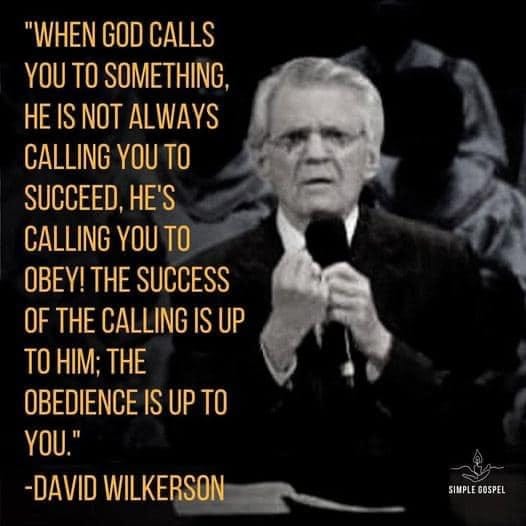
Faith over Fear is a very popular t-shirt that people, particularly Christians, love to wear, but few will live it out in their lives. Based on Matthew 25 we should be more afraid of God for non-action on our part than fearing the loss that comes from taking risks. Knowing what our calling is and having that discernment comes from being in community with each other. Through that community we achieve affirmation of our calling and fear falls away. As the church speak goes, if God has called you to do something He will equip you for it. You are called to obey that calling. The rest is up to God. It might not be your role to be the next Billy Graham, but you might be mentoring the next Billy Graham.
What is the post-COVID churches strategy? Well, there are tons of articles about that too. Again, I have listed several below full of opinions about it.
https://outreachmagazine.com/features/leadership/64670-5-insights-about-the-post-covid-church.html
https://baptistnews.com/article/your-church-after-covid-restart-refresh-or-relaunch/
Many of these articles talk about how “churches can’t be the same anymore” to which you may agree or disagree. If the church was truly focused on authentic worship, evangelism and making disciples, there would never be a need for change. You may think that is a gross oversimplification and being overly critical. The justification is we have all these programs and events to attract new people to our church. That’s not evangelism. That is marketing. What does the bible say about making evangelism and making disciples?
John 12:32 ESV And I, when I am lifted up from the earth, will draw all people to myself.
The church is trying to do God’s job for Him. Sorry, Jesus, we’ve got this! God is the one who does the drawing of people, not the event. Evangelism has never changed. Discipleship has never changed. Neither needs to change. They work in their current form. Both have always been one person investing time and energy in another. Even if each of us decided today just to focus on one person in our lives, it would still be double the size of the church. Again, you are probably thinking that is another oversimplification. Well, the research supports the fact that it does work.
https://www.evangelismcoach.org/personal-invitations-to-church-are-most-effective/
Focusing on starting programs and this and that and the other thing will be the death of the small evangelical church. Have events and have programs but don’t call it evangelism or discipleship. We need to call things what they are, which most times is marketing and entertainment. Evangelism is what happens when people are actually sharing the Gospel with someone that is lost. Its not just a presentation but a conversation. We love presentation (entertainment), but lack on the conversation.
Discipleship happens when we are ministering to each other, edifying each other, and learning and growing together in Jesus. As mentioned above, replacing the old with the new, and becoming transformed. Jesus invested in twelve men. That should be about the max length of your circle of influence as well, and your family should be your first focus. If Jesus, who is God, chose to only invest in twelve, don’t think you can do better.
Worship styles have changed but the substance and the object of that worship should never change. Don’t call it worship when it’s really entertainment. If we were really focused what was pleasing to God and worshiping Him, then conversations about playing certain styles of music in worship would never happen in a church environment.
People prefer preference instead of deference. We want our preference of style instead of deference to the leading of the Holy Spirit. If we really had faith in our worship leaders to bring us into focus into worshiping God, then our focus would be outward instead of satisfying the inward. Every Sunday regardless of the style of music the object would be bringing glory to God instead of satisfying ourselves if we were truly focused on authentically worshiping God.
If the music is not to our satisfaction, then we cannot satisfactorily worship God? Is that how it is supposed to work? Think about it. You will find that the issue is more with us than it is with the music.
And many churches have programmed the Holy Spirit right out of their services. We must keep that schedule tight and on time, so people don’t miss out on the lunch fried chicken and or tacos. People love to misuse 1 Corinthians 14:40 as much as Matthew 7:1 when it comes to their agendas.
In a pre-Covid world, we barely gave God two nights or two times per week. God was lucky to get four Sunday mornings out of us. On that one Sunday morning we’re probably begrudged to give Him, let’s not worry about the time. Because if you are worried about how long the service is lasting, you probably really aren’t there to worship God anyways because He clearly isn’t your focus. You are probably thinking that was a judgement, but again it’s really a fruit inspection. This isn’t referring to those unlucky few that must work on Sundays but those who have the rest of the afternoon to do what they will. If you are the latter, just leave quietly when you’ve had your fill and let the rest of us focus on why we’re really there.
How can you be authentic about worshiping God when you are worried about whether or not people are engaged in worship because of the time? Let the door hit them in the backside on their way out of the building. If God isn’t worthy of the few extra minutes, then He isn’t really your God.
Do know what eternity is going to look like? Its going to be the eternal worship of God. Not eternal hunting or fishing, playing cards or in the ball field, or eating fried chicken and tacos. Its going to be worshiping at the feet of Jesus and God the Father and the Holy Spirit. If you don’t like what’s happening on Sunday morning now, you aren’t going to like eternity in Heaven. But you won’t like the alternative either. You might want to think about this in detail.
Are we looking at the end of the small evangelical church?
It will be for some, but for others who are focused on the basics, it will be time of thriving and revival. If bets were to be laid down, those churches with older congregations who stayed quarantined longer probably are struggling more than those where younger ones were more eager to return. Excuses will be made that it was done for safety, but the truth is fear. Not just the fear of death, but that of dying alone steered the evangelical church for two years.
Our faith of an eternal reward was trumped by the desire of a few more miserable years on this planet suffering sin and death. For the Christian, being with Jesus in Heaven is supposed to be the goal. If Phillipians 1:21 were to have any truth, fear of death should be last thing we should worry about. For the believer, death has no sting. Again, if we truly believe in the sovereignty of the omniscient, omnipresent, omnipotent and omnibenevolent triune God over our lives, who exists in our past, present and future, then we will not die and minute sooner or later than we supposed to according to His will. Of course, we can affect our lives by our own decisions, but those who have faith in God wouldn’t truly want to interfere with that plan.
My thoughts about my eventual death are never too far from my mind. Passing in my sleep would be preferred, but if the Lord chooses for me to go another way, then there’s no choice but to defer and accept it and like a Star Trek Klingon face death with eyes wide open going down swinging. Instead of worrying about how we’re going to die, perhaps we should focus more on living a life that is worth remembering more than how we died. This song by Rollins Band often plays in my mental jukebox when these thoughts enter my mind.
Should we be seeking death then? No, of course not. Even in the Dark Age, Christian believers still gathered in churches during the Black Death at the height of the pandemic. Their faith was that only God could save them. Even with all our technology and medical knowledge, we didn’t have enough faith in God to get us through COVID.
The goal is to live a long and prosperous life for the kingdom. We should be making healthy decisions and making the most of our time while we have it. If we believe we’re just travelers in this world, and Jesus Christ is really our prize, then exiting stage left to be with Him shouldn’t be feared, but welcomed.
Covid-19 revealed to many that we fear death more than we have faith in Jesus. Again, He separates the wheat from the chaff. He will reward those faithful servants in the kingdom to come. Again, we prefer preference over deference. Just defer to the One who exists in your past, present and future to know what is best for you.
You probably think that this is pretty harsh, but in many ways this is directed at myself more than anyone. Serving in different aspects of evangelism and discipleship, even worship, we tend to not see the forest for the trees. We feel more than we think. We want more than we give. Of course, I could be wrong about all of it, but its just my perspective from the bottom end.
#evangelicalchurch #smallcountrychurch #Covid19 #pandemic #megachurch #discipleship #evangelism #worship #faithoverfear